00 I've Chosen Love
Grant reflects on a daily creative and mindfulness practice that has shaped how he sees the world—and how he chooses to live.
Each morning, he begins by writing a “creative thought,” a positive way to frame the day or look at the world. After that, he sits down for an hour or so and tries to write a poem a day. He describes the poems as his form of journaling—an ongoing effort to “twist” his view of life into new perspectives.
Before he writes, Grant usually meditates for at least a few minutes. For him, the meditation is a way to invite his “inner muse” forward and to minimize the ego so that different points of view can surface on the page. He sees the practice as both spiritual and practical: less self-importance, more openness.
From his window, Grant looks out at what he calls his “mini woods.” Watching the breeze move through the trees reminds him that much of life is invisible. He reflects on how limited human perception is—how our senses capture only a small slice of reality—and what that implies: we don’t fully know what’s going on in existence. The woods, in their quiet motion and complexity, become a living reminder of interconnectedness.
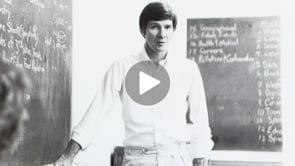
That perspective carries into how he sees children and people in general. He connects it back to his years in the classroom: the more he meditated, the more he realized he wasn’t only teaching history, geography, psychology, or economics. He was teaching children life through those disciplines. When he holds that view, his work—and really everything he does—feels like a gift.
Grant closes with a guiding choice that has become central to his worldview: would he rather be right, or would he rather be loved? His answer is clear. He chooses love—opening his heart and mind, forgiving himself, and leaning toward the more positive nature of life.
This chapter is a quiet, powerful reflection on creativity, humility, and the kind of inner practice that changes how you show up in the world.